
2-Room Flexi and 3-Room Fit-Out: Eight Moves That Make a Small BTO Live Bigger
38 sqm won't grow, so plan it properly: full-height runs, double hang, a shallow tall shoe cabinet, a usable household shelter, a fold-away work corner — and one wall left deliberately empty.
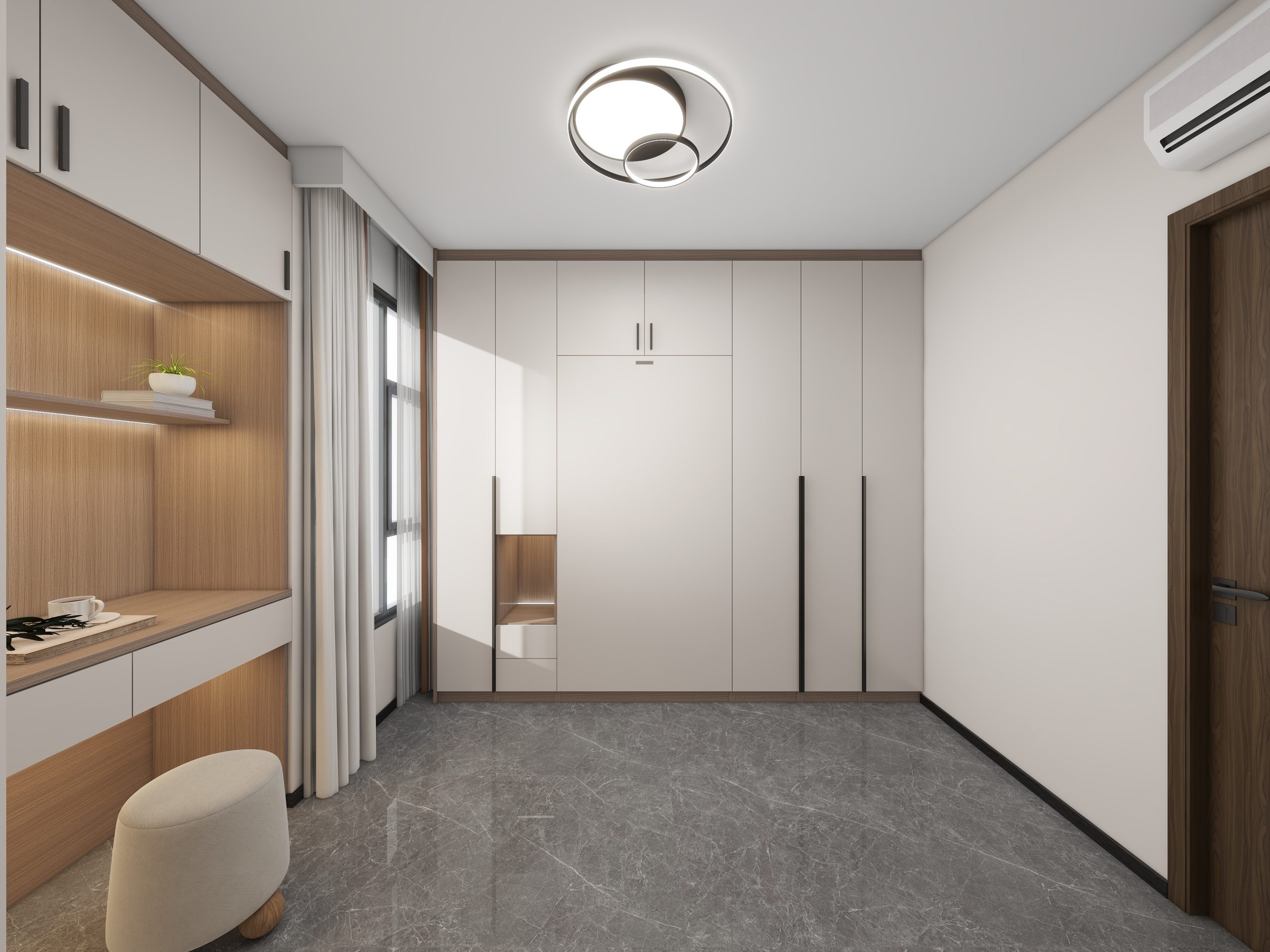
A 2-room Flexi is about 38 sqm. A 3-room is about 65. Neither is going to grow, so every decision is really the same decision: does this piece of carpentry earn its footprint? Small flats punish generic furniture and reward planning — which, happily, is the one thing that costs nothing at the design stage.
Start from the plan, not the furniture
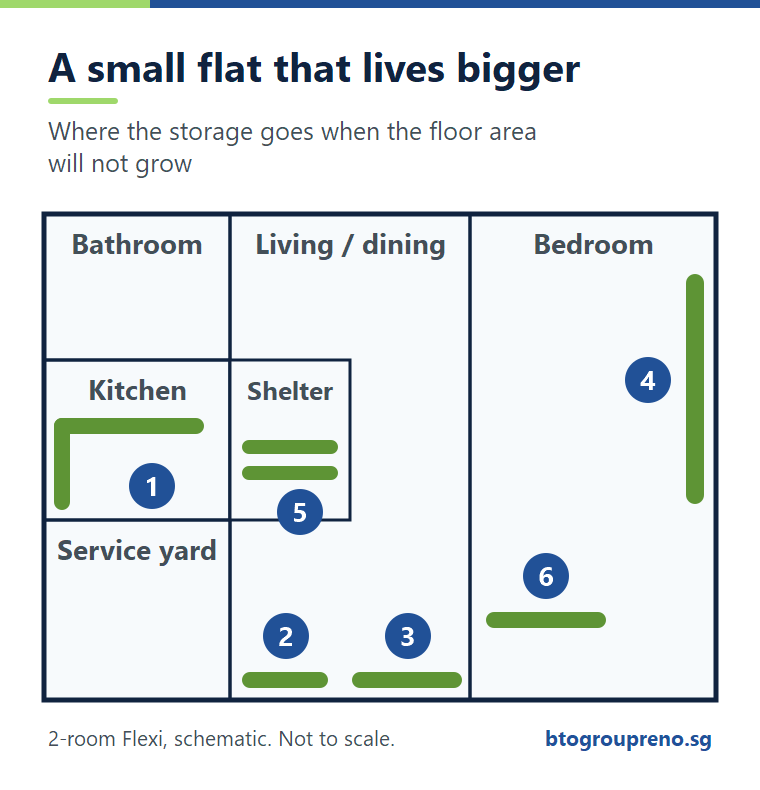
- L-shaped kitchen, full height to the ceiling
- Ventilated shoe cabinet, shallow — keep the door swing
- Suspended TV console: floor stays visible, room reads bigger
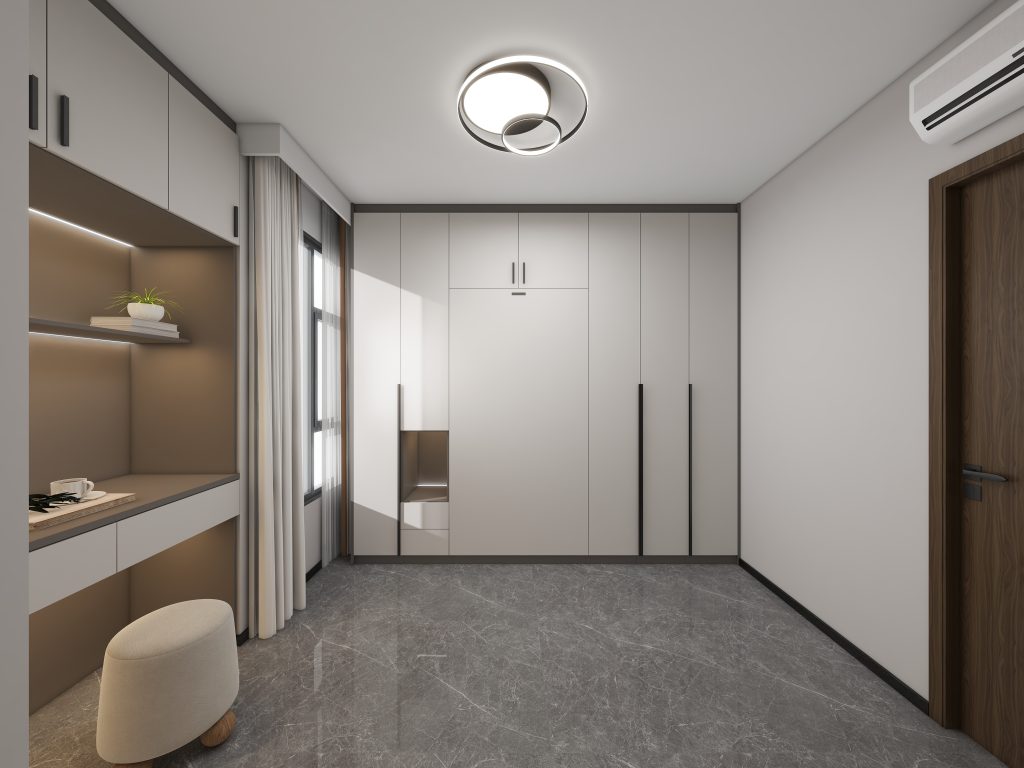
- Wall-to-wall wardrobe, sliding doors
- Shelter shelving — demountable, door and vents untouched
- Fold-down desk: the work corner that disappears
Six zones do almost all the work in a small flat: the kitchen run, the entry, the TV wall, the bedroom wardrobe, the household shelter, and one flexible work corner. Get those right and you will not need a single free-standing cabinet.
1. Go full height, everywhere it’s fixed
The cheapest square footage in Singapore is vertical. A wardrobe that stops at 2.1 m throws away half a cubic metre per bay; run it to the ceiling with top boxes and the luggage, the festive decorations and the spare duvet all disappear. Same for the kitchen and the shoe cabinet.
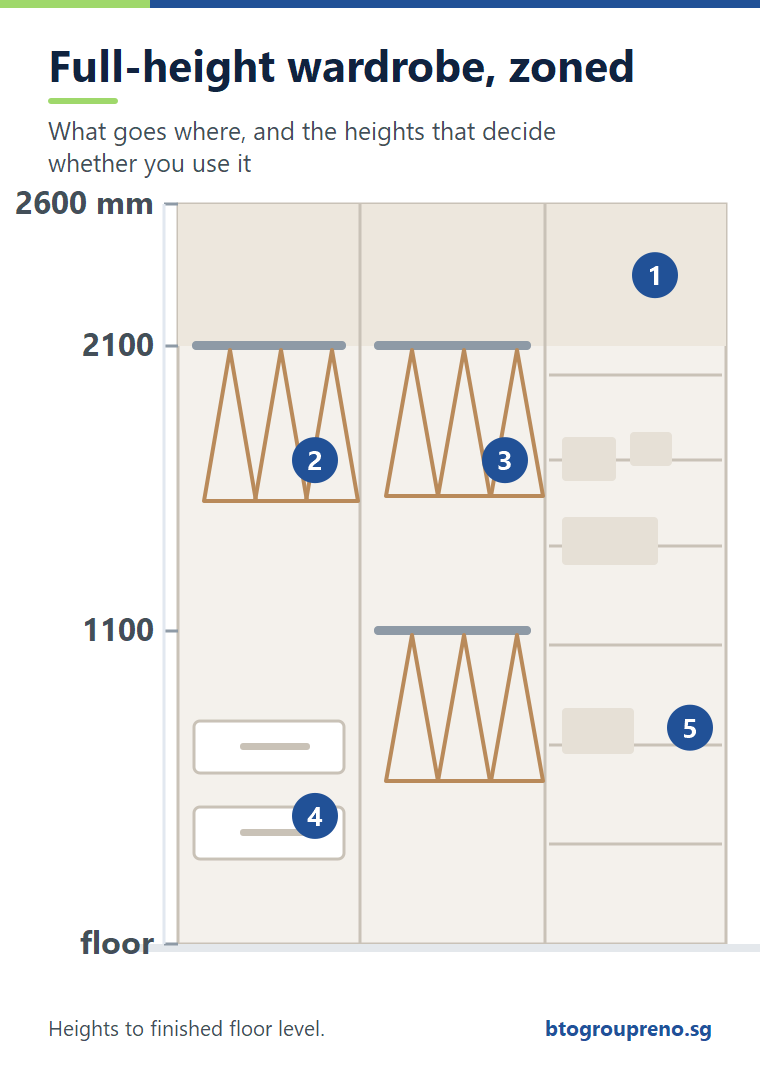
- Top boxes above 2.1 m: luggage and festive boxes
- One long-hang bay for dresses and coats
- Double hang doubles rod length in the same wall
- Drawers low, where you look down into them
- Open shelves for bags — 600 mm depth, 550 mm bare minimum
2. Double hang beats one long rail
Most of what you own is short: shirts, blouses, folded trousers. One bay of long hang for dresses and coats is usually enough; double-hang the rest and you get twice the rail in the same wall. Keep drawers low, where you look down into them, and open shelves at eye level for bags.
3. Make the entry shallow but tall
A 300 mm-deep shoe cabinet that runs to the ceiling holds more than a 450 mm one at waist height, and it doesn’t fight the front door swing. Ventilated panels are not optional in this climate — sealed shoe storage in Singapore is a smell you only make once. More on that in Entryway Shoe Cabinets & Whole-Home Storage.
4. Suspend what you can
A suspended TV console and a floating vanity leave the floor visible underneath, and a room reads as big as the floor you can see. It also makes cleaning a two-minute job instead of a furniture-moving exercise.
5. Use the household shelter properly
The shelter is 3–4 sqm of dead space in every flat. Shelving turns it into a pantry, a store or a luggage room — and contrary to the common belief, you may drill into it: SCDF permits inserts and removable screws up to 50 mm deep on the internal faces. The catch is that anything you mount must come out again within 48 hours if you are notified, so build it demountable. What you must never touch is the blast door, its notice, and the ventilation plates.
6. One work corner, folded away
Hybrid work isn’t going anywhere, but a full desk eats a small living room. A fold-down desk or a 450 mm-deep counter tucked into the bedroom wall gives you a working position that disappears at 7 pm. Put the power point behind it at the design stage; retrofitting a socket for a monitor is the classic small-flat regret.
7. Choose sliding doors only where you must
Sliding wardrobe doors buy back the swing radius — worth it in a tight bedroom where the bed is close to the wardrobe. The trade-off is real: you can only ever open half the wardrobe at once. In a room with 700 mm of clearance, swing doors are still better. We compared both in How to Get Your Custom Wardrobe Right.
8. Let one wall be empty
The temptation in a small flat is to line every wall with storage. Don’t. One uninterrupted wall — even a short one — is what stops the flat feeling like a container. Put the storage on three walls and give the fourth to light.
What this costs
A small-flat fit-out is genuinely cheaper, because the runs are shorter — carpentry is priced by the foot, at roughly S$120–150 per foot for kitchen cabinets and S$300–320 per foot for wardrobes. A 2-room Flexi core package — kitchen, one wardrobe, bathroom cabinet — lands well under what a 4-room needs, and it’s exactly the kind of repeatable scope that group buying discounts best: 10% off at five homes, up to 15% at twenty.
Frequently asked questions
Is a 2-room Flexi too small for built-ins? The opposite. The smaller the flat, the worse free-standing furniture fits — built-ins are how you reclaim the gaps.
Can I drill into the household shelter? Yes, within limits — SCDF allows drilling up to 50 mm deep into the internal walls and ceiling for removable inserts and screws, provided the fixture can be taken down within 48 hours on notice. Not allowed: power-driven nails inside, wall tiles or plastering on the internal faces, and any change to the blast door, its notice or the ventilation plates.
Mirrors — do they really help? A full-height mirror on a wardrobe door is free floor area, visually. A mirrored wall is overkill.
Should I put a bed with storage underneath? In a 2-room, yes; it’s the single biggest storage win per dollar. Check the gas-lift clearance against the wardrobe doors first.
Plan it against your real layout
Pick your unit type and the true floor plan loads in — build the fit-out online, see it in 3D, and get an itemised price.
btogroupreno.sg/ · WhatsApp +65 8852 6257 · Call +65 6222 3668
