
Low-Formaldehyde Carpentry for Your BTO: How to Specify and Verify It
A practical, step-by-step guide for HDB homeowners: how to specify low-formaldehyde carpentry, put it in writing, and verify it on delivery, so an “eco” promise becomes a real one.
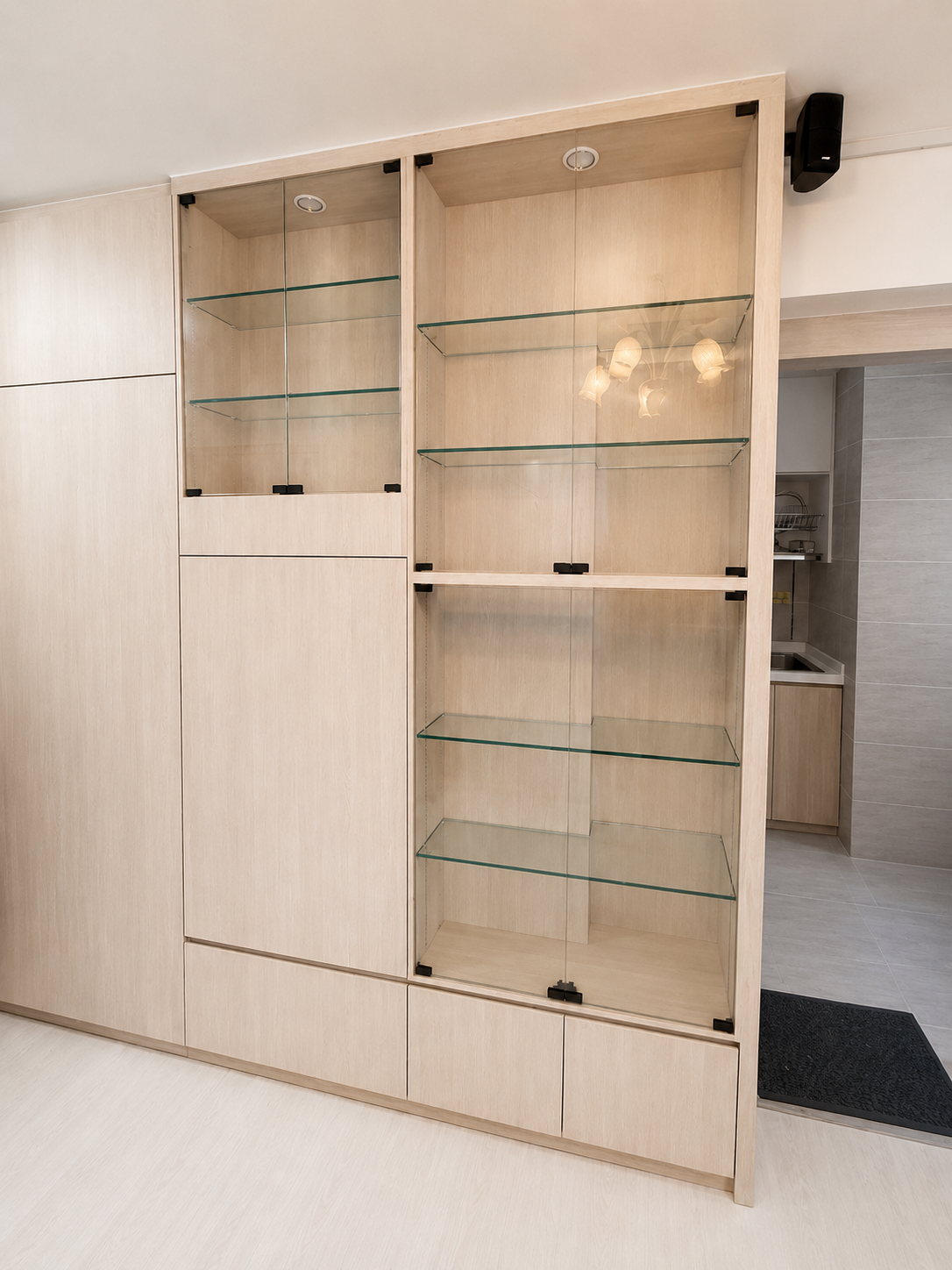
Almost every renovation contractor will tell you their board is “eco” or “low formaldehyde”. Some can support that claim with documentation; others use the terms only as general marketing language. The difference matters, because you are installing a whole flat of new board at once and living with the finished installation.
This practical guide explains: how to specify low-formaldehyde carpentry for your BTO, put it in writing, and verify it, so the promise becomes something you can check. Every home pictured here is one we built and handed over — browse more in our portfolio of completed HDB homes.
Step 1: Decide the grade you actually need
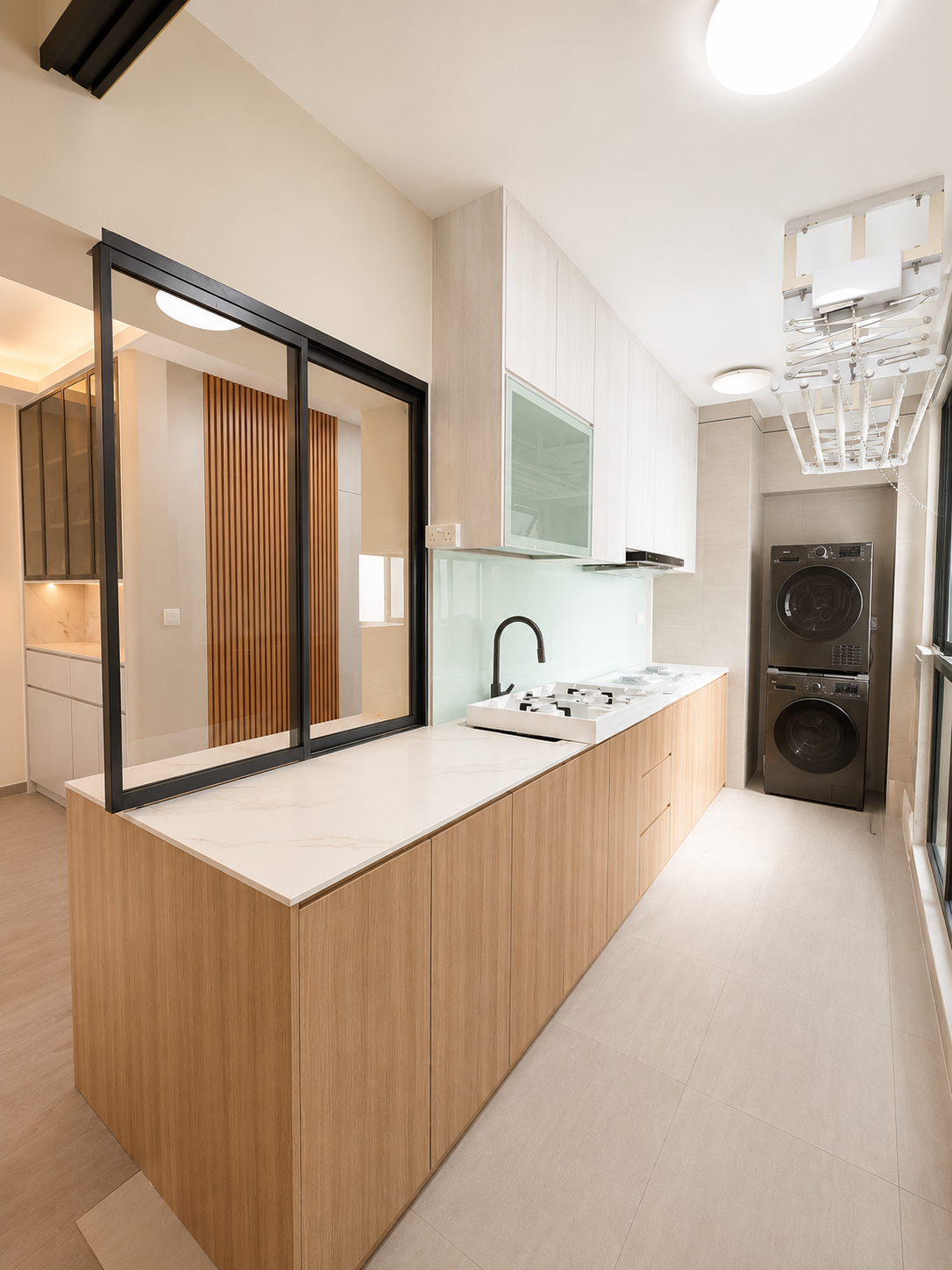
Every cabinet in the 308B Tengah Park kitchen above was specified with a defined board grade before we built it. Match the grade to the room: bedrooms, children’s rooms and nurseries may warrant E0 or ENF; general, well-ventilated areas can be E1. If you want one simple rule, specify E0 across the flat for consistency and peace of mind. Our grades guide breaks this down room by room.
Step 2: Put the grade in writing on the quotation
A grade agreed verbally on site is not a commitment. Ask for the emission grade and the test standard to be written into the quotation or specification, next to the item. If a contractor is confident in their board, this should be straightforward.
Step 3: Check the carcass AND the doors and laminate
A common oversight is that the cabinet carcass is graded, but the doors, backing and laminate are not, or are a different grade. Confirm that every part of the cabinet meets the grade you agreed, not just the main panels.
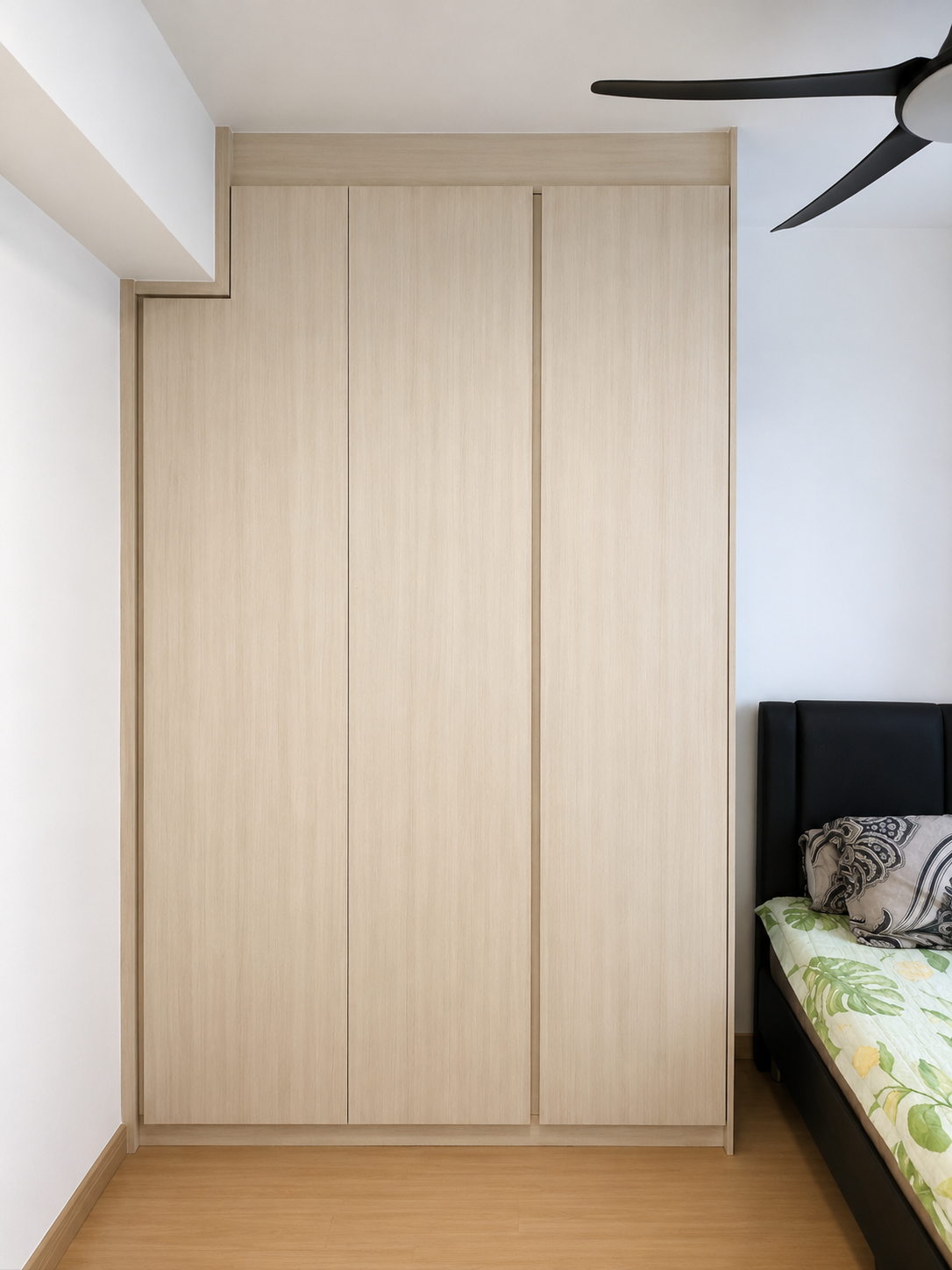
On the 189A Marsiling wardrobe above, the carcass, the doors and the backing are all the same agreed grade — rather than only the most visible panels. That is exactly the detail worth checking for your own project.
Step 4: Ask to see the test report or panel label
For a full-flat job, it is reasonable to ask to see the manufacturer’s test report or the grade printed on the panel label. A real document names the product and the standard. A generic “eco” sticker with no standard is not evidence.
Step 5: Verify on delivery
When the panels or finished cabinets arrive, look for the grade marking on the board or packaging, and photograph it. This simple step creates a useful record and helps ensure that the agreed material is supplied. If the delivered board is unmarked, ask before installation begins.
Red flags that it’s just marketing
- No letter grade is named, only words like “eco” or “green”.
- A grade is quoted but no test standard is given.
- The contractor will not put the grade in writing.
- Only the carcass is graded; the doors and backing are “don’t worry about it”.
- The delivered panels carry no marking at all.
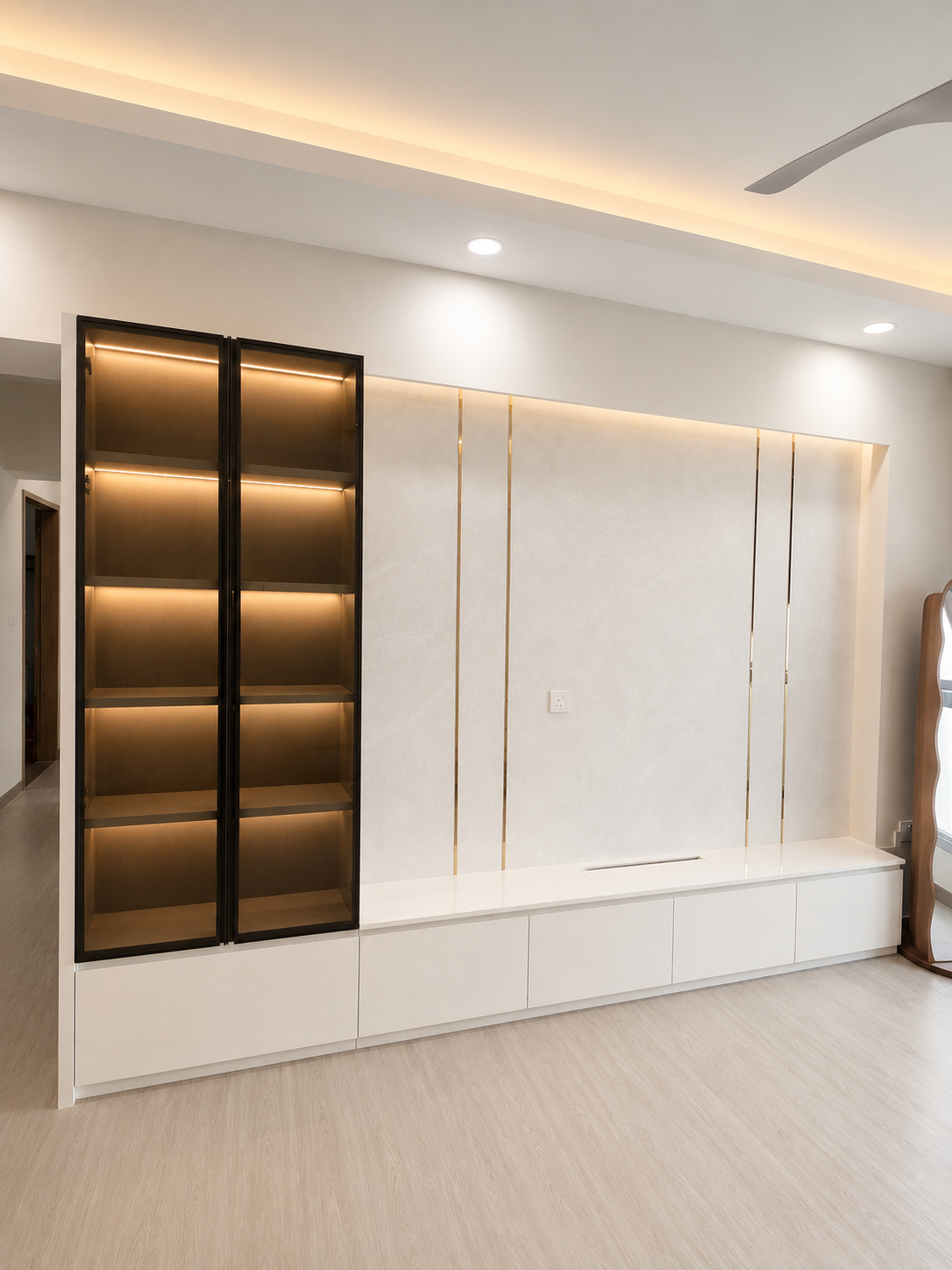
A feature wall like this 308B Tengah Park TV console is a large, visible run of board, so it is exactly where we make sure the delivered panels carry the grade marking before installation begins.
What it costs to upgrade
The premium for E0 or ENF over standard E1 board is usually modest against the total carpentry cost. Ask your contractor to price the upgrade as a clear line item so you can decide with real numbers rather than a vague “higher cost”.
If a grade is genuine and properly documented, a contractor can put it in writing and show you the marking. If they can’t, treat the “eco” claim as unverified marketing.
A simple verification checklist
- Grade and standard written into the quotation.
- Same grade confirmed for carcass, doors and backing.
- Manufacturer test report or panel label seen.
- Delivered board marking checked and photographed.
- Upgrade cost shown as a line item.
Frequently asked questions
Is “eco board” the same as low-formaldehyde? Not necessarily. “Eco” is a marketing word with no fixed meaning. A named grade (E0, ENF) tested to a named standard is what actually tells you the emission level.
Can I ask for this on a package deal? Yes. Even on a renovation package, you can ask which board grade is included and request E0 or ENF as an option, in writing.
What if the delivered board isn’t marked? Ask your contractor to confirm the grade and standard before installation. It is far easier to resolve before the cabinets go up than after.
Renovate together and save
Insisting on a verified grade is easier when the cost remains manageable, and group renovation can help keep the specification affordable. With BTO Group Reno, homes in the same BTO share prefabrication and installation, so a low-formaldehyde spec can remain affordable.
Explore more
- Background: E0, E1 and ENF — what the grades mean
- The numbers: E0 vs E1 — what the test numbers mean
- Humidity too: choosing board that survives Singapore’s humidity
Ready to start your renovation?
Every kitchen and wardrobe you have seen here was designed, prefabricated in our own local workshop and installed by our own team — backed by 1,000+ HDB projects across Singapore. So the board grade we promise is the board grade you get.
- Book a free showroom visit to see and compare board finishes in person.
- Join a Group Reno for your BTO, or check the upcoming groups.
- Prefer to talk? Contact us or call +65 8852 6257.
