
Choosing Moisture-Resistant Boards for HDB Kitchens and Bathrooms
Emission grade and moisture resistance are two different things. How to choose board that survives Singapore's humidity in HDB kitchens, bathrooms and service yards.
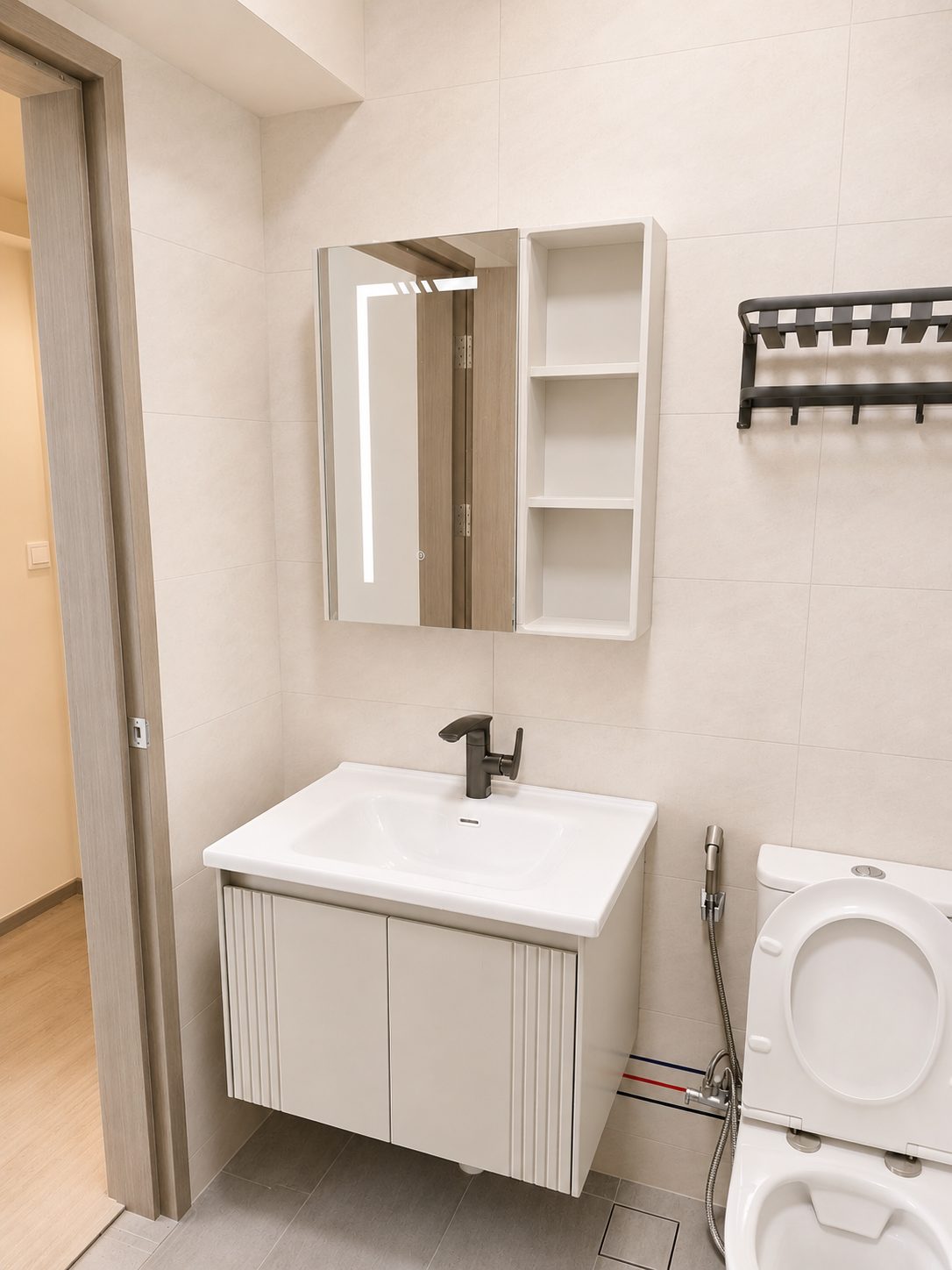
Singapore is hot and humid all year, and parts of an HDB flat are regularly exposed to moisture: under the kitchen sink, around the bathroom vanity, along the service yard. Using an unsuitable board for those zones and it swells, softens and delaminates, no matter how good its formaldehyde grade is.
That is the key point many homeowners miss: a low-emission grade and moisture resistance are two separate things. This guide covers moisture resistance, so your carpentry remains durable as well as visually appealing. The bathrooms, kitchens and wardrobes shown here are real HDB homes we built — see more in our portfolio.
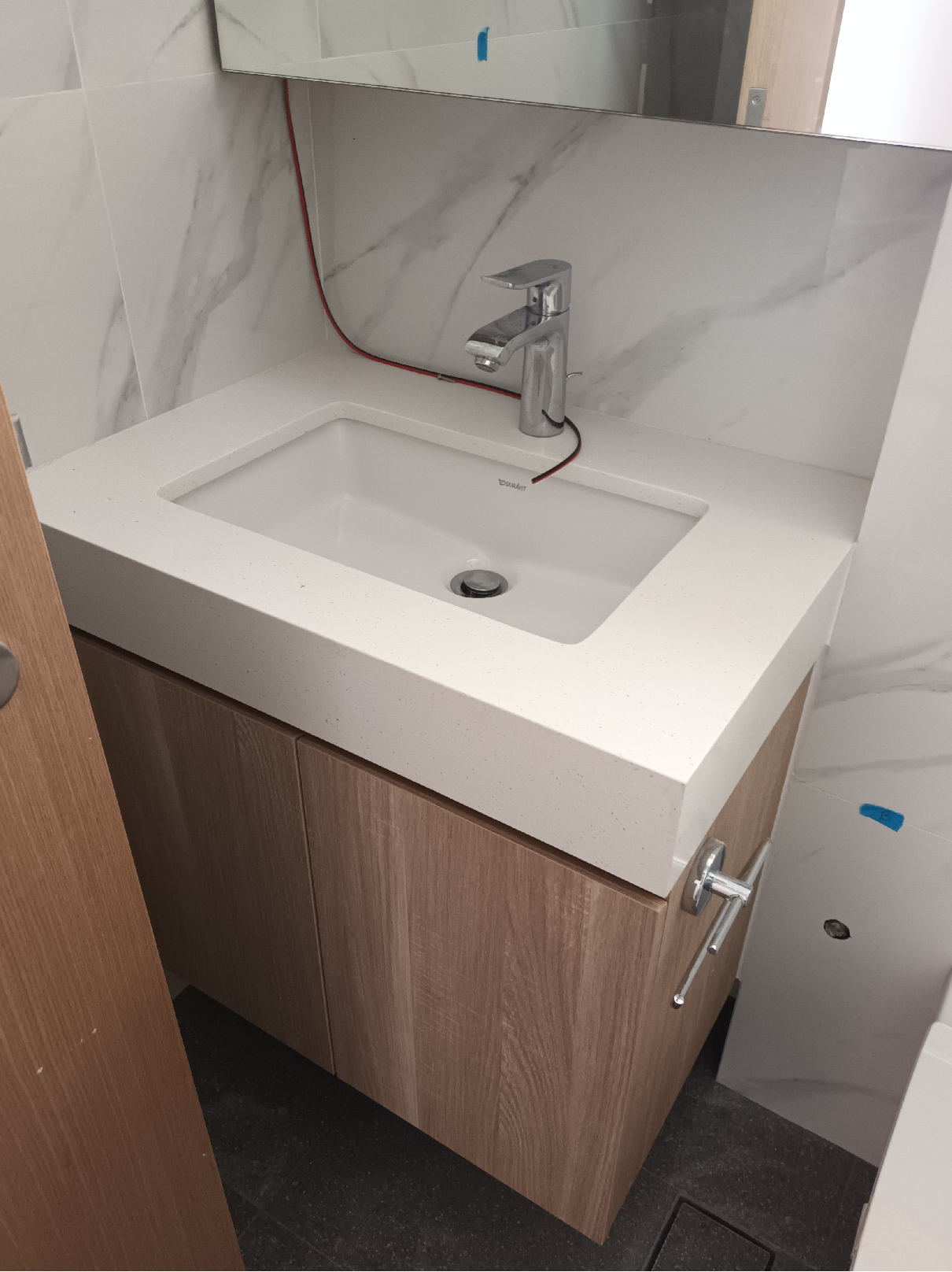
Emission grade and moisture resistance are two different things
The bathroom vanity above is a good example: even with a top emission grade, it needs a board that can withstand humid and damp conditions. A board can be ENF, the lowest-formaldehyde grade, and still be a standard, non-moisture-resistant panel that swells the first time water sits on an unsealed edge. Emission grade relates to indoor air quality; moisture rating describes how the board copes with water. You need to specify both where it matters.
Where moisture attacks HDB carpentry
- Under the kitchen sink and around the dishwasher, where slow leaks and condensation collect.
- The bathroom vanity and any cabinet near a shower or basin.
- The service yard and utility area, exposed to washing and outdoor humidity.
- Base cabinets sitting on floors that get mopped or occasionally flooded.
- Anywhere warm, humid air condenses, including near the bomb shelter and windows.
Moisture-resistant board, in plain English
For wet and damp zones, ask for moisture-resistant board rather than standard board. In practice that means moisture-resistant (MR) MDF or particleboard, or a plywood with a water-resistant bond such as WBP or a marine-grade bond. These are manufactured to provide better resistance to moisture exposure; standard board is not.
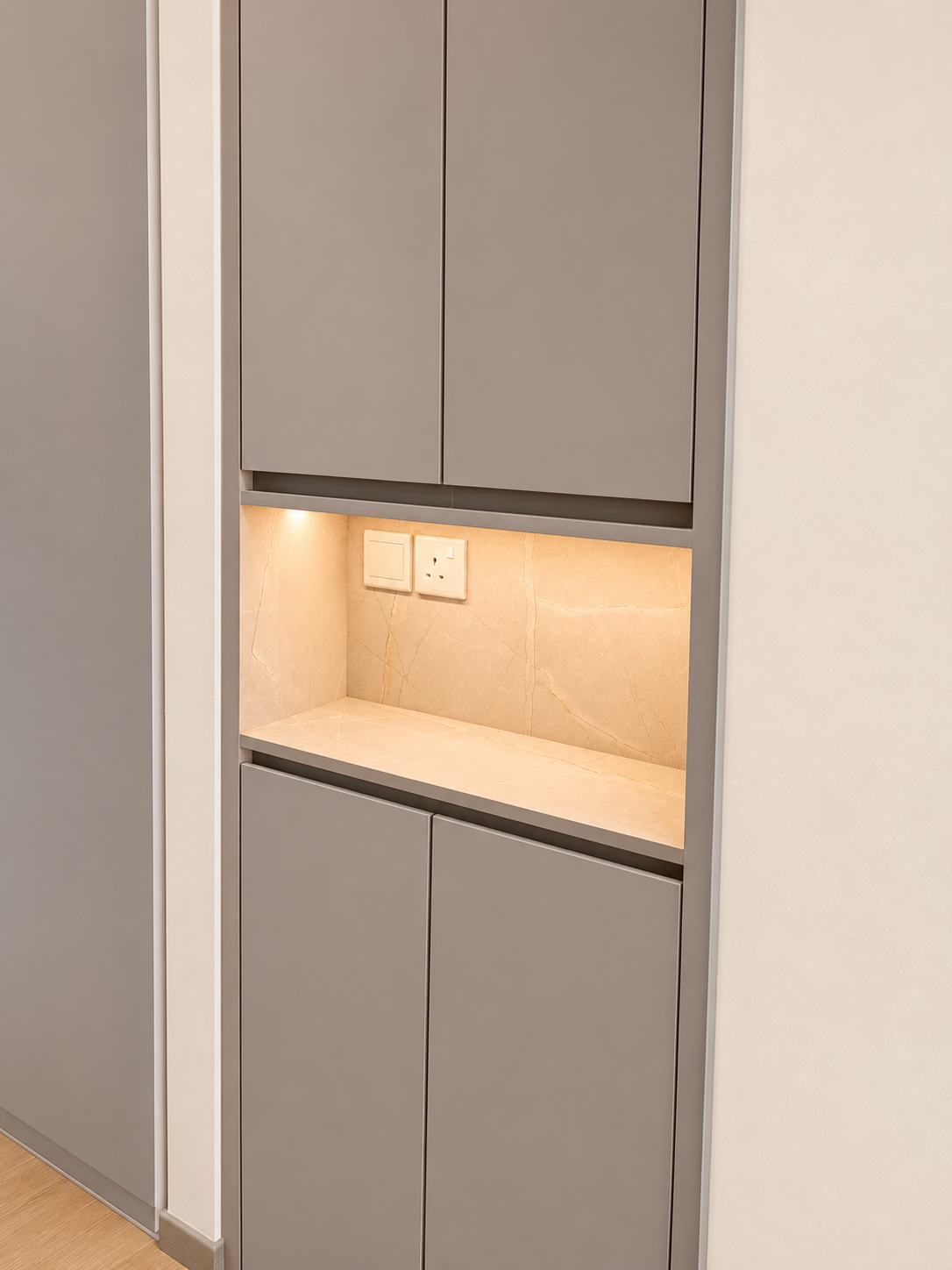
An entryway shoe cabinet like this 308B Tengah Park one sits near the door and the service yard, where damp shoes and outdoor air reach it, so we seal its edges and pick a board that is better able to withstand occasional splashes.
Match the board to the zone
- Dry areas (wardrobes, TV console, bedrooms): standard board at your chosen emission grade is fine.
- Kitchen base and under-sink: moisture-resistant board, sealed edges, and a proper back panel.
- Bathroom and vanity: moisture-resistant board plus water-resistant finishes and sealing at every edge.
- Service yard: the area with the greatest exposure, specify the most water-resistant suitable material.
Edges, backs and sealing matter as much as the board
Moisture rarely penetrates a board through its laminated face. It gets in at unsealed cut edges, screw holes and unfinished backs. So moisture protection is also about workmanship: proper edge banding, sealed cut-outs around pipes, silicone where cabinets meet wet walls, and PVC or aluminium profiles in the wettest spots.
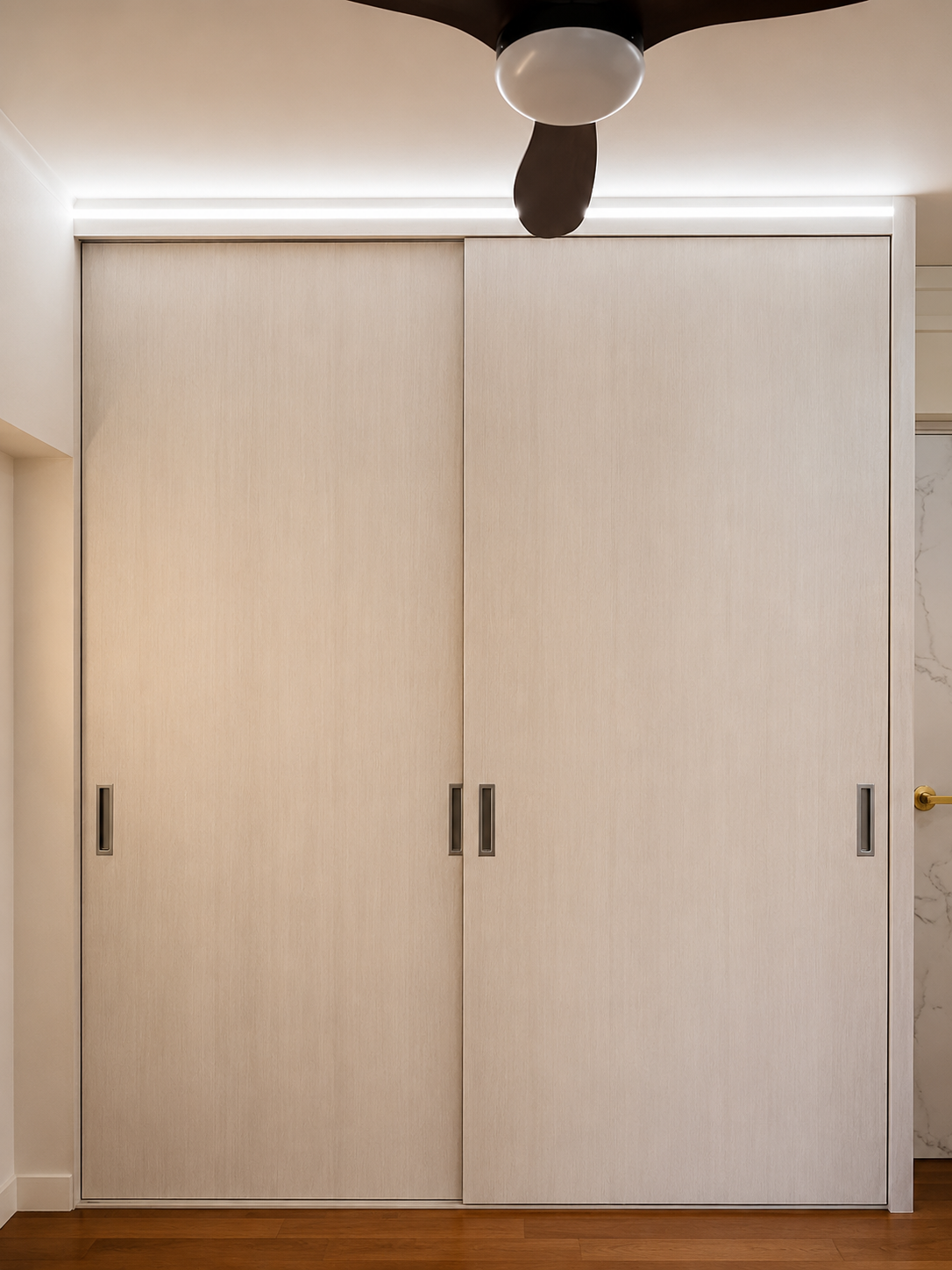
Even a dry-room piece like the 407 Yishun sliding wardrobe above benefits from sealed edges: Singapore’s ambient humidity can affect unprotected board over time, not only where there is a direct splash.
Signs your carpentry is failing from moisture
- Swelling or a spongy feel along bottom edges and around the sink.
- Laminate lifting or bubbling (delamination).
- Doors or drawers that no longer sit flush after a few months.
- A persistent musty smell inside base cabinets.
What to ask your contractor
- Is the under-sink and bathroom board moisture-resistant, not standard?
- What bond class or moisture rating does it carry?
- Are all cut edges, cut-outs and backs sealed?
- Is there a workmanship warranty covering moisture damage?
A great emission grade will not save carpentry from the wrong board in a wet zone. Specify moisture resistance in areas exposed to water.
Frequently asked questions
Is moisture-resistant board also low-formaldehyde? It can be, but the two are specified separately. Ask for both: the emission grade for air quality and the moisture rating for durability.
Do I need moisture-resistant board everywhere? No. Dry areas like bedroom wardrobes do not need it. Concentrate it where water is: kitchen base, bathroom, service yard.
My kitchen swelled under the sink after a year. Why? Common causes include standard board, inadequately sealed edges and undetected leaks. Moisture-resistant board and properly sealed edges substantially reduce the risk.
Renovate together and save
Getting the right board in the right zone is about specification, not spending more everywhere. With BTO Group Reno’s group renovation, neighbours share prefabrication and installation, so you can put moisture-resistant board where it counts without unnecessarily increasing the overall quotation.
Explore more
- Air quality side: E0, E1 and ENF formaldehyde grades explained
- Getting it in writing: how to actually get low-formaldehyde carpentry
- 5 kitchen design ideas for 2026
Ready to start your renovation?
Every kitchen and wardrobe you have seen here was designed, prefabricated in our own local workshop and installed by our own team — backed by 1,000+ HDB projects across Singapore. So the board grade we promise is the board grade you get.
- Book a free showroom visit to see and compare board finishes in person.
- Join a Group Reno for your BTO, or check the upcoming groups.
- Prefer to talk? Contact us or call +65 8852 6257.
