
Long-Term Maintenance & Repair Guide for Built-in Carpentry in HDB Flats
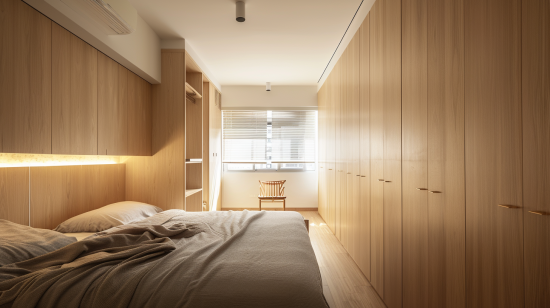
Most articles focus on designing and installing built-in carpentry for HDB BTO flats. However, very few cover what happens after you move in — the long-term care, repair issues, durability in Singapore’s humid environment, and how to maintain your built-ins so they last for years. That gap creates a big opportunity.
This guide covers everything you need to know: maintenance schedules, common defects, repair strategies, warranties, and cost estimates — all tailored to Singapore’s public housing context and built-in carpentry from BTO flats.
1. Why Maintenance Matters for Built-in Carpentry in HDB Flats

- Singapore’s climate (high humidity, temperature fluctuations) can cause wood swelling, laminate peeling, hinge rusting.
- Built-ins are often sealed units — hidden behind sliding doors or under beds — making defects harder to detect early.
- A well-maintained built-in increases resale value; damaged or warped wardrobe lowers buyer confidence.
- Many homeowners overlook maintenance until problems surface, which can cost far more to rectify.
2. Common Defects & Repair Needs in Built-ins

- Warped doors/sliding panels due to moisture or improper material grade
- Peeling laminate/veneer from low-quality boards or poor finishing
- Hinge/screw loosening after heavy use
- Water damage beneath wardrobes (especially near bathrooms/kitchens)
- Hardware rusting (hinges, sliders, soft-close mechanisms)
- Insufficient ventilation behind units leading to mould or musty smell
3. Maintenance Schedule & Checklist
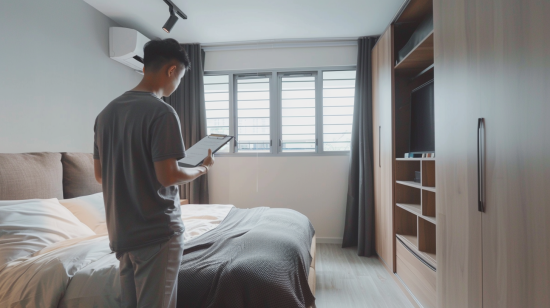
| Timeframe | What to Check | Preventive Action |
|---|---|---|
| 0–12 months | Check all cabinet doors, drawers for alignment; inspect for laminate lifting | Tighten screws, apply silicone seal if needed |
| 1–3 years | Inspect sliding wardrobes for smooth track operation; check hinges for rust; look for moisture ingress | Clean tracks, apply lubricant, ensure no water leak behind units |
| 3–5 years | Assess laminate surfaces for wear/scuffing; test soft-close mechanisms; check base boards for swelling | Refinish edges, replace damaged hardware parts, replace kicker boards if swollen |
| 5+ years | Deep inspection of full height wardrobes, platforms beds, internal panels; assess resale condition | Consider re-laminate or replace inner shelving, upgrade hinges, refresh surface finish |
4. What Affects Carpentry Repair Costs?
Repair costs vary significantly depending on the defect, extent of damage, access, materials, hardware and whether parts can be repaired or need replacement.
- Hardware issues: hinges, runners and tracks may sometimes be replaced without rebuilding the full cabinet.
- Door or panel damage: pricing depends on material, dimensions and whether matching finishes remain available.
- Moisture damage: swollen base panels or internal boards may require partial replacement after the source of moisture is resolved.
- Surface renewal: re-lamination or replacement scope depends on the condition and construction of the existing built-in.
For accurate repair pricing, inspect the affected cabinet and confirm the repair scope before quoting.
5. Warranty, Materials & Quality Choices

- Choose boards rated E0 formaldehyde for longer durability and less warping in humid climate.
- Ensure hinges/sliders are from reputable brands (e.g., Blum, Hafele) with 5-10 year warranty.
- Ask for carpentry warranty covering workmanship and materials (often 1-3 years standard; extended options available).
- Maintenance contract: Some firms (including BTOGROUPRENO.SG) offer periodic check-ups at 2-3 year intervals.
6. DIY Tips & Professional Service When Needed

- Regular dusting and wiping of cabinet doors to prevent grit damaging hinge moving parts.
- Use silica-gel or moisture absorbent beneath wardrobes placed near wet zones.
- Avoid steam/humidity direct flow toward built-in units (e.g., from wet bathrooms).
- Professional service if you see: warped door, swollen floor beneath wardrobe, peeling laminate >10 mm, or faulty soft-close hinges.
FAQ (Optimised for Google Snippets)
Q1: How often should I maintain built-in wardrobes in my HDB flat?
👉 At least once a year for basic checks, deeper inspection every 3 years, full overhaul after 5+ years.
Q2: What is the expected lifespan of built-in carpentry in Singapore’s BTO flats?
👉 With good materials and maintenance, 10–15 years with minimal major repairs, though parts (hinges, sliding doors) may need earlier service.
Q3: Will built-in carpentry affect my HDB resale value if not maintained?
👉 Yes — visible defects (warped doors, peeling laminate) can reduce value or buyer appeal; well-maintained units preserve value.
Related HDB Carpentry Guide: For planning built-in carpentry before fabrication and installation, see our HDB BTO carpentry planning guide.
